Contents
PU leather is softer, more breathable, and more premium-feeling, while PVC leather is tougher, cheaper, and more rigid. For most modern upholstery, apparel, and automotive applications, PU is the better material; PVC remains strong for heavy commercial use where cost and abrasion dominate.
The Short Answer
The difference is chemistry. Polyurethane (PU) is a flexible polymer that mimics leather’s softness and drape; polyvinyl chloride (PVC) is a rigid thermoplastic softened with plasticizers, giving it stiffness and toughness. PU dominates consumer-facing products (sofas, car seats, bags, jackets) because it looks and feels closer to real leather. PVC is used where durability per dollar matters more than hand feel — restaurant seating, truck interiors, luggage, and industrial applications. If you are choosing for quality perception, choose PU. If you are choosing for raw toughness at minimum cost, PVC can still win.
What PU Leather Is
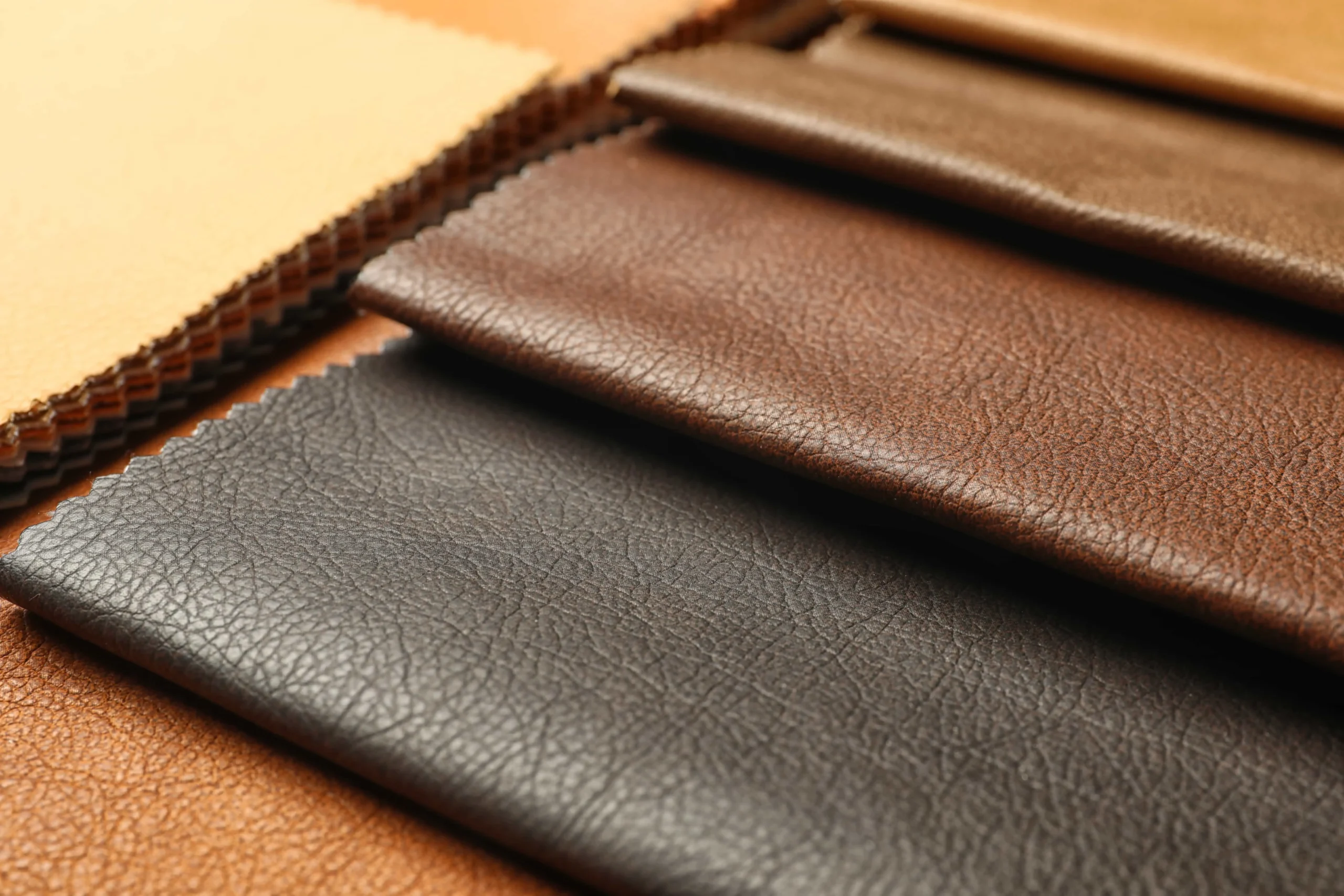
PU leather is made by applying a polyurethane coating to a textile backing — knit, woven, or non-woven. The coating can be produced by transfer coating (casting a film and bonding it to the fabric) or direct coating. PU’s defining advantage is molecular flexibility: the polymer chain itself bends like leather, which is why quality PU resists cracking better than PVC and why its hand feel approaches genuine leather. PU is also more breathable than PVC because water vapor can pass through the polymer matrix in small amounts. High-end versions use a microfiber base to further improve durability and comfort — this is the “microfiber PU” used in premium automotive seating.
What PVC Leather Is
PVC leather (also called vinyl) is produced by coating fabric with plasticized PVC — the PVC resin is mixed with plasticizers, stabilizers, and pigments, then spread or calendered onto a backing and embossed with a grain. The plasticizers are what make PVC flexible; without them it is rigid pipe. That dependence on plasticizers is PVC’s weakness: over time, plasticizers migrate to the surface and the material stiffens, cracks, or becomes tacky — a process accelerated by heat and UV. PVC’s strengths are cost, toughness, and chemical resistance, which keep it popular in heavy commercial seating, marine upholstery, and budget automotive applications.
Head-to-Head Comparison
| Factor | PU Leather | PVC Leather |
|---|---|---|
| Hand feel | Soft, leather-like | Stiff, plastic-like |
| Breathability | Moderate | Very low |
| Flex durability | Good (grade dependent) | Prone to cracking over time |
| Abrasion resistance | Good | Very good |
| Cost | Higher | Lower |
| Cold behavior | Stays flexible | Stiffens in cold |
| Chemical safety profile | Generally cleaner | Plasticizer and chlorine concerns |
| Typical lifespan (upholstery) | 5-10 years | 3-8 years, cracking dependent |
Manufacturing Process Differences
Both materials are made on coating lines, but the chemistry differs. PU lines typically use solvent-based or water-based polyurethane solutions cast onto release paper, then bonded to a backing — solvent recovery and water-based systems matter for environmental compliance. PVC lines use calendering or spreading of molten plasticized compound, which is faster and cheaper but releases chlorine-based chemistry. These process differences explain the cost gap and why PU production requires more careful environmental control. For buyers, the manufacturing difference shows up in two ways: PU’s cleaner chemistry supports certifications like OEKO-TEX® Standard 100 more readily, and PU’s softer base improves sewing and finished-product quality.
How to Judge Quality
- Topcoat thickness: thicker PU topcoats resist abrasion and peeling; check for “coating weight” (g/m²).
- Backing density: dense knits and microfiber bases resist tearing; flimsy backings fail at seams.
- Flex test: bend a sample repeatedly — quality PU returns without cracking; cheap PVC whitens or splits.
- Martindale abrasion cycles: 50,000+ cycles for heavy upholstery use is a good baseline.
- Heat and UV: ask about plasticizer and UV stabilizer packages for car or sun-exposed use.
Chemical & Compliance Considerations
PVC’s chlorine backbone and phthalate plasticizers have faced regulatory scrutiny in consumer products — some jurisdictions restrict phthalates in goods that contact skin, and phthalate regulation has reshaped PVC formulations. PU avoids chlorine chemistry but solvent-based production requires careful VOC management. For export markets, third-party certification is the practical answer: OEKO-TEX® Standard 100 screens harmful substances for textiles, and REACH compliance covers EU sales. A supplier that holds these certifications and shares test reports reduces your compliance risk at the point of sale.
Which Application Suits Which
- PU: sofas, armchairs, car seats, headrests, bags, jackets, shoes, electronic device covers — where look and feel sell the product.
- PVC: restaurant and banquet seating, truck and tractor interiors, luggage, protective covers, marine seating — where toughness and cost dominate.
- Microfiber PU: premium automotive, office ergonomic chairs, high-end bags — where performance justifies higher cost.
Because the application determines the right chemistry, it pays to brief a supplier with both lines. FUZHOU’s synthetic leather production runs PU, PVC, microfiber, and silicone materials, so the recommendation is driven by your use case, not by what a factory happens to make.
FAQ
Is PU leather better than PVC leather?
For most consumer products, yes — PU is softer, more breathable, more flexible, and closer to real leather in hand feel. PVC remains competitive where toughness and low cost matter most, like heavy commercial seating.
Does PVC leather crack?
Yes, over time. PVC relies on plasticizers for flexibility, and as plasticizers migrate out with age, heat, and UV exposure, the material stiffens and cracks. High-quality PVC with good stabilizers lasts longer.
Is PU leather waterproof?
PU leather resists water well — spills sit on the surface and wipe away. It is not fully waterproof over long exposure, but for upholstery and apparel use, water resistance is generally sufficient.
Which is more expensive, PU or PVC?
PU leather is more expensive. PU chemistry and manufacturing are costlier, and premium PU with microfiber bases costs significantly more than PVC.
Is PVC leather safe for furniture?
PVC furniture leather is generally safe when manufactured to current standards, but phthalate plasticizers have been restricted in some markets. For peace of mind, choose certified materials (OEKO-TEX® Standard 100) and verify compliance for your target market.
PU or PVC? Get a Material Recommendation
Sources: Wikipedia – Polyurethane; Wikipedia – Polyvinyl Chloride; Wikipedia – Phthalate; OEKO-TEX® Standard 100.