Contents
Faux leather is any man-made material that imitates leather’s look and hand — and it comes in many chemistries: PU, PVC, microfiber, silicone, and emerging bio-based types. Each has distinct performance, cost, and compliance profiles, so choosing correctly starts with understanding the family tree.
What Faux Leather Really Is
At its core, faux leather is a coated textile: a polymer layer applied to a fabric backing to reproduce leather’s surface. The two variables that define the product are the polymer (what the surface is made of) and the backing (what holds it together). Change either and you get a different material with a different price and lifespan. That is why “faux leather” spans cheap fashion PU that peels in a year and engineered automotive microfiber leather that lasts a decade — they share a name, not a specification.
The Faux Leather Family Tree
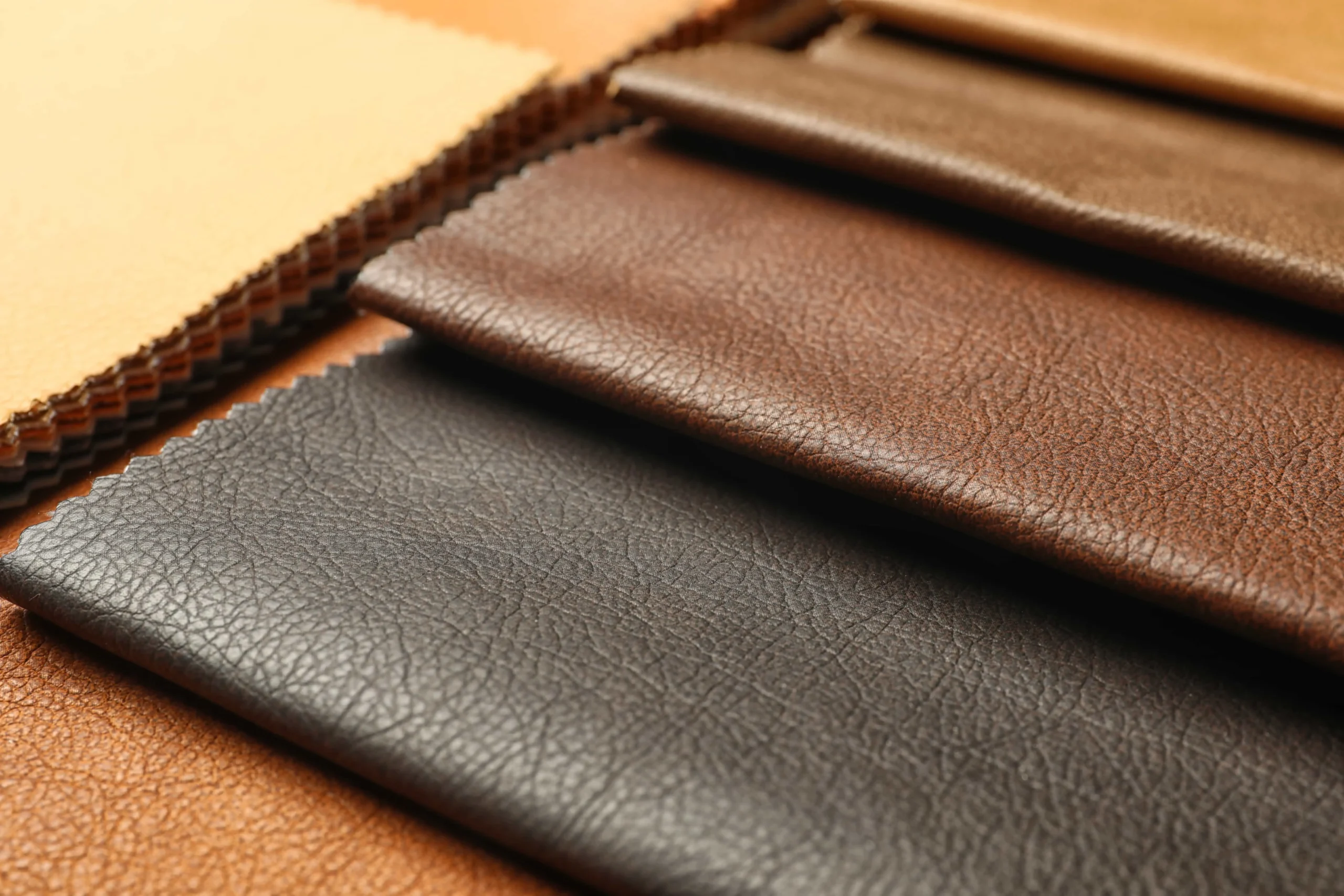
- By polymer: PU (polyurethane), PVC (polyvinyl chloride), silicone, bio-based polymers.
- By backing: knit, woven, non-woven (standard), microfiber non-woven (premium).
- By finish: smooth, embossed grain, suede/microfiber napped, patent, metallic.
- By chemistry: solvent-based, water-based, recycled content.
Most commercial naming — “PU leather,” “microfiber leather,” “silicone leather” — refers to the polymer or backing combination. Understanding the two-part structure lets you decode any spec sheet.
PU Leather
Polyurethane leather is the workhorse of the industry: a flexible PU topcoat on a knit or woven backing. It offers the best balance of leather-like hand, cost, and durability for consumer products. Standard PU suits sofas, bags, jackets, and general upholstery; higher-grade PU with thicker coatings and better stabilizers handles automotive use. Its weakness is that thin coatings peel, so grade selection matters more than the PU label.
PVC Leather
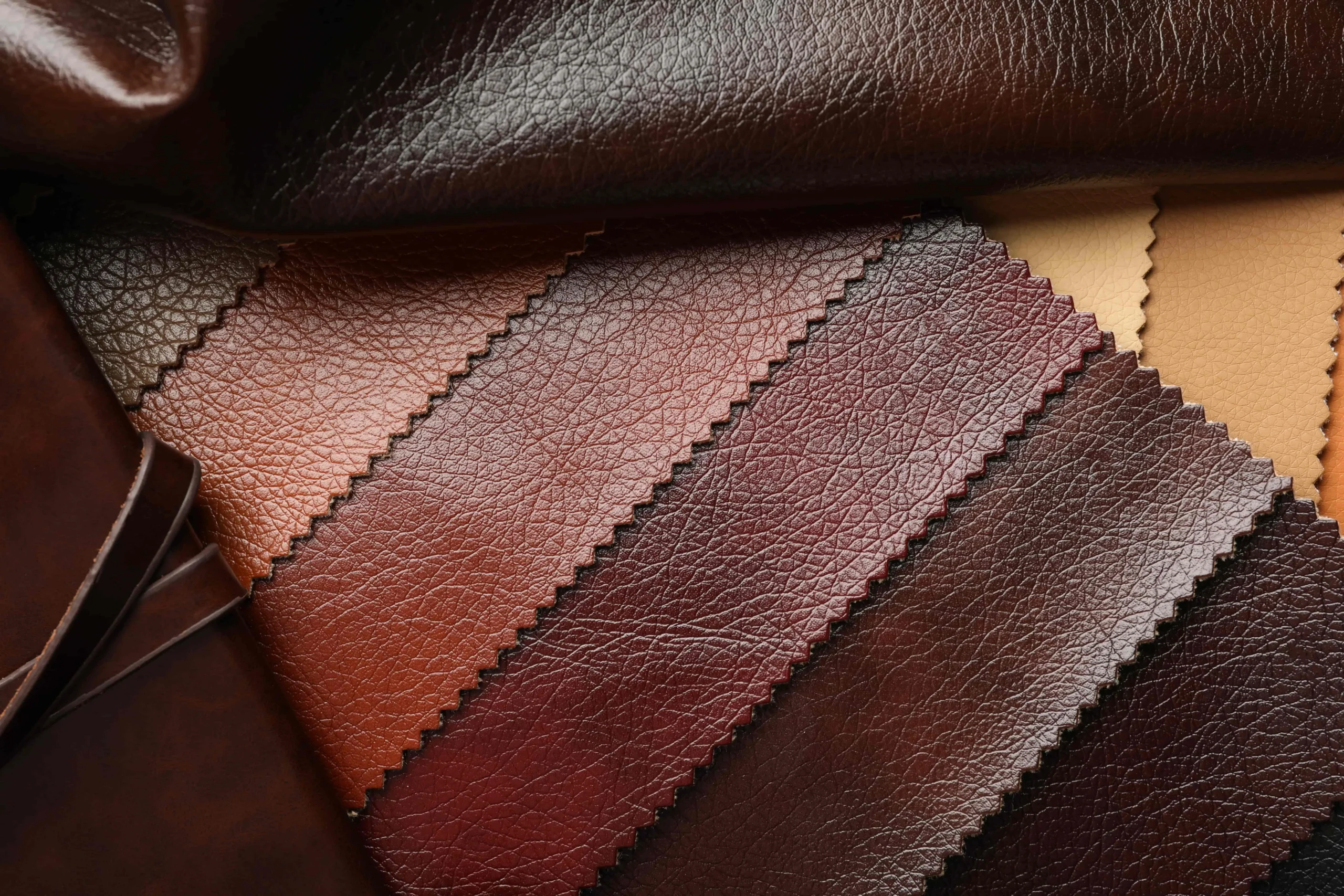
PVC leather (vinyl) is plasticized PVC coated onto fabric. It is tough, cheap, and highly abrasion-resistant — the classic restaurant seating, truck interior, and luggage material. Its drawbacks: a stiffer, more plastic hand; low breathability; and plasticizer migration that causes cracking over time. PVC remains the most cost-effective choice where toughness per dollar is the priority and premium feel is not required.
Microfiber Leather
Microfiber leather is the premium tier: a microfiber non-woven base (ultra-fine polyester/polyamide fibers) coated with PU. The dense fiber base gives it tear resistance far beyond knit-backed PU, plus better breathability and a soft, suede-like reverse side. It is the standard for luxury automotive seating, high-end office chairs, and premium accessories. Expect 8-15 year lifespans in automotive use — near-leather performance at synthetic cost.
Silicone Leather
Silicone leather uses a silicone elastomer surface instead of PU or PVC. It is the emerging premium choice for its exceptional stability: silicone resists UV, heat, and chemicals far better than PU or PVC, stays flexible in extreme cold, and contains no plasticizers that migrate. It is also free of chlorine and, in many formulations, more easily recyclable. The cost is higher and the hand differs slightly from leather, but for high-end furniture, marine, and medical applications, silicone leather is the durability leader.
Other Types: Bio-Based & Recycled
The market is adding plant-based and recycled options: bio-based PU using vegetable-derived polyols, recycled-PET backings, and materials blended with cactus, mushroom, or apple waste. These address the environmental criticism of petroleum-based faux leather, but performance still varies widely — some match conventional PU, others are fashion-grade only. When evaluating “eco” faux leather, ask two questions: what percentage is actually bio-based or recycled, and what are its abrasion and flex test results? Certification matters here, and OEKO-TEX® Standard 100 remains the common baseline for harmful substances.
Full Comparison Table
| Type | Hand Feel | Durability | Breathability | UV/Heat Resistance | Cost | Best Applications |
|---|---|---|---|---|---|---|
| PU leather | Soft, leather-like | Good (grade dependent) | Moderate | Fair-good | Low-medium | Sofas, bags, apparel, general upholstery |
| PVC leather | Stiff, plastic | Tough but cracks over time | Very low | Fair | Low | Restaurant seating, luggage, heavy commercial |
| Microfiber leather | Soft, premium | Excellent | High | Good | Medium-high | Automotive seats, office chairs, luxury bags |
| Silicone leather | Supple, distinct | Excellent | Moderate-high | Excellent | High | High-end furniture, marine, medical |
| Bio-based | Varies | Varies widely | Varies | Varies | Medium-high | Eco-conscious consumer goods |
How to Choose the Right Type
- Budget, general use: standard PU leather.
- Maximum toughness at low cost: PVC leather.
- Automotive or heavy daily use: microfiber leather.
- Extreme environments (UV, marine, cold): silicone leather.
- Sustainability story for consumers: certified bio-based or recycled options.
- Any application: verify with test data (abrasion, flex, tensile) and third-party certification.
FAQ
How many types of faux leather are there?
The main types are PU leather, PVC leather, microfiber leather, and silicone leather, plus emerging bio-based and recycled options. Within each, grade and construction create huge performance differences.
Which type of faux leather is best?
It depends on use. Microfiber leather is best for durability and comfort in automotive and premium seating. Silicone is best for UV and chemical resistance. Standard PU is the best all-round value for furniture and fashion.
Is microfiber leather real leather?
No. Microfiber leather is a synthetic material — a microfiber non-woven base with a polyurethane surface. It is a premium type of faux leather, not animal hide.
What is the most expensive type of faux leather?
Silicone leather and premium microfiber leather are the most expensive. Bio-based materials with certified sustainable sourcing can also carry a premium price.
Is PU or PVC better?
For most consumer products, PU is better — softer, more breathable, more leather-like. PVC wins only where maximum toughness at minimum cost is the priority, such as heavy commercial seating.
Every Faux Leather Type, One Certified Manufacturer
Sources: Wikipedia – Polyurethane; Wikipedia – Polyvinyl Chloride; Wikipedia – Microfiber; OEKO-TEX® Standard 100.