
Automotive interiors have undergone a transformation. Where once genuine leather was the only premium option, today’s automotive-grade faux leather offers superior durability, consistency, and value — while meeting the demanding performance requirements of modern vehicles.
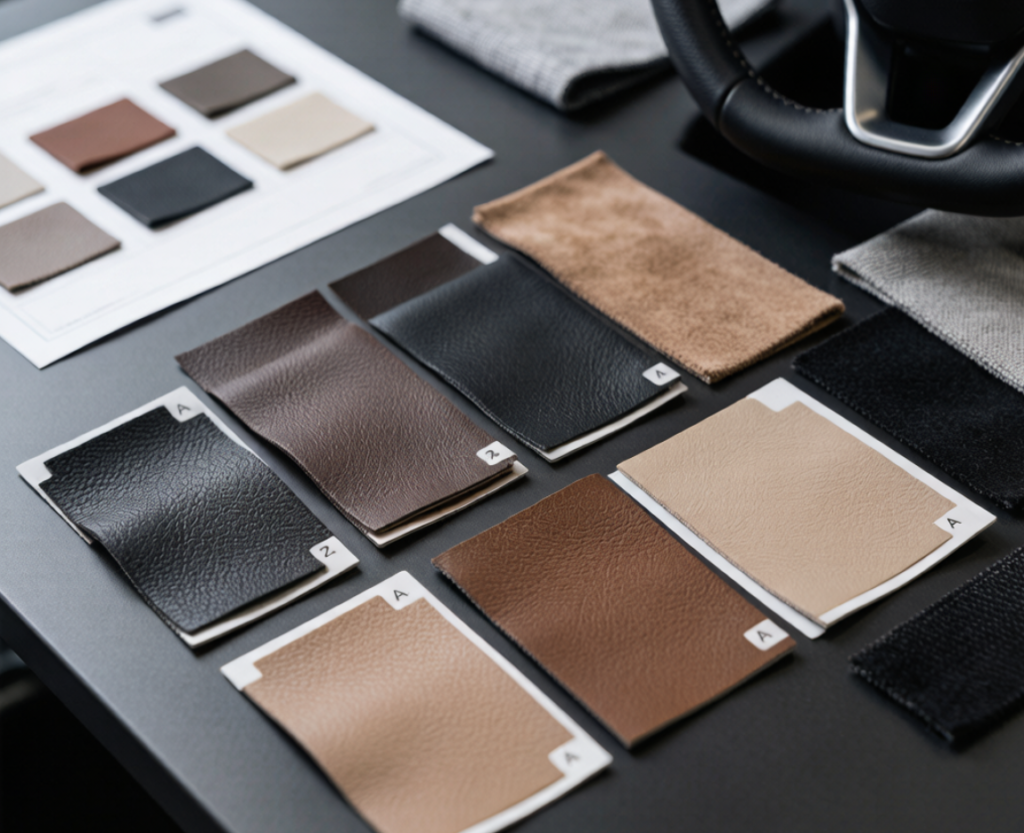
Why Faux Leather in Automotive?
Automakers and aftermarket suppliers increasingly choose quality faux leather over genuine leather for several reasons: consistent material quality (no natural defects), precise color matching across production batches, easier cleaning and maintenance, better resistance to UV damage and temperature extremes, and lower cost with comparable luxury appearance.
Automotive interior materials are tested to rigorous standards including FMVSS 302 (flammability) and ISO 105-B06 (lightfastness).
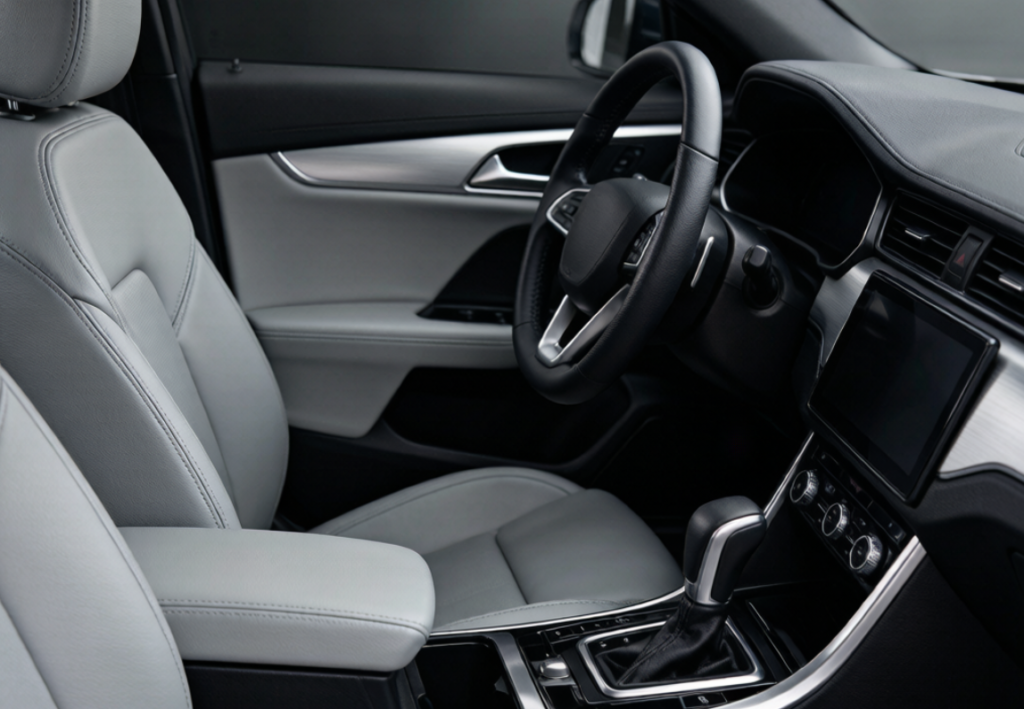
Automotive-Grade Material Types
| Material | Best Application | Key Properties |
|---|---|---|
| PU Leather (automotive grade) | Seats, door panels, center consoles | UV stable, flexible, breathable option |
| PVC Leather (automotive grade) | Dashboard, door panel lowers | Durable, cost-effective, good heat resistance |
| Microfiber suede | Headliners, pillar trim, accent panels | Soft texture, non-reflective, acoustic properties |
| Silicone leather | Premium applications | Best UV/heat resistance, premium feel |
Key Performance Specifications
Automotive-grade faux leather must meet demanding specifications: Abrasion resistance — minimum 50,000 cycles (Martindale). Flex resistance — minimum 100,000 flexes without cracking (ISO 11640). Heat resistance — stable from -30°C to +90°C. UV lightfastness — minimum 4 on the blue wool scale (ISO 105-B06). Flammability — meets FMVSS 302 requirements.
Seat Covers & Upholstery
Seat covers are the most demanding application for automotive faux leather. The material must flex with body movement, resist abrasion from entering and exiting the vehicle, withstand temperature extremes from -30°C (winter) to +90°C (summer sun), and resist UV degradation. Premium PU leather with a tricot knit or woven backing is the preferred choice.
Dashboard & Door Panels
Dashboard and door panel applications have different requirements: the material must conform to complex 3D shapes during manufacturing, resist heat without distortion (dashboard surface temperature can reach 100°C+), and minimize windshield glare. Slip-coated or low-gloss PU leathers with high heat resistance are specified for these areas.
Headliners & Pillars
Headliners and pillar trim require lightweight materials with acoustic properties. Microfiber faux suede is popular for these applications because it is lightweight, non-reflective (reduces windshield glare), and reduces cabin noise.
UV Resistance & Temperature
UV degradation is the primary cause of faux leather failure in automotive interiors. Quality automotive-grade materials include UV stabilizers and absorbers that protect the polymer from breakdown. Testing per ISO 105-B06 (xenon arc accelerated weathering) simulates years of sunlight exposure — look for materials rated 4 or higher on the blue wool scale.
Compliance Standards
Key automotive standards for faux leather include: SATRA test methods for physical properties, FMVSS 302 for flammability, ISO 105-B06 for UV resistance, ISO 11640 for flex resistance, and OEM-specific standards for VOC emissions, fogging, and odor.
OEM vs Aftermarket
OEM applications require strict adherence to manufacturer specifications, extensive testing and validation, consistent batch quality, and long-term supply commitments. Aftermarket applications: more flexibility in material selection, shorter lead times, competitive pricing, and easier customization for unique projects.
Fuzhou Automotive-Grade Faux Leather
Engineered for the road. Fuzhou Leather manufactures automotive-grade PU and PVC faux leather designed to meet OEM and aftermarket specifications. Our materials are tested for UV resistance, heat aging, flex endurance, and abrasion. Available in custom colors, textures, and backing types.Explore Automotive-Grade Faux Leather → | Request Specifications & Samples
FAQ
Is faux leather good for car interiors?
Yes — automotive-grade PU faux leather is engineered for extreme temperatures, UV exposure, and daily use.
Best type for automotive?
UV-stabilized PU leather with tricot knit backing is the industry standard for automotive interiors.
How long does it last?
5-10 years depending on UV exposure and maintenance. Premium UV-stabilized materials can last 8-10+ years.
Does it get hot?
It can — but IR-reflective grades reduce surface temperature by 10-20°F. Light colors help significantly.
What standards apply?
FMVSS 302 (flammability), ISO 105-B06 (UV), ISO 11640 (flex), and OEM-specific specs.
Conclusion
Automotive-grade faux leather has become the material of choice for modern vehicle interiors. With proper UV stabilization, heat resistance, and flexibility specifications, quality PU faux leather outperforms genuine leather in durability, consistency, and value. For manufacturers and suppliers, selecting the right automotive-grade material is critical to avoiding premature failure and maintaining customer satisfaction.