
Contents
Faux leather wins on leather-like appearance and structure at a lower cost, while microfiber wins on breathability, softness, and moisture management. For upholstery and automotive interiors where the leather look matters, quality faux leather is usually the better choice; for apparel and active applications where comfort dominates, microfiber pulls ahead.
The Short Answer
Faux leather is a coated fabric — typically polyurethane (PU) or PVC applied over a knitted or woven backing — engineered to imitate real leather’s surface and hand. Microfiber is an ultra-fine fiber fabric, often made from polyester and polyamide splits finer than 0.01 dtex, prized for its softness, breathability, and cleaning power. The two are not direct substitutes: faux leather delivers the leather aesthetic; microfiber delivers performance. Which one fits your product depends on the application, and manufacturers like FUZHOU Leather produce both, so the decision is about end use, not availability.
What Faux Leather Is
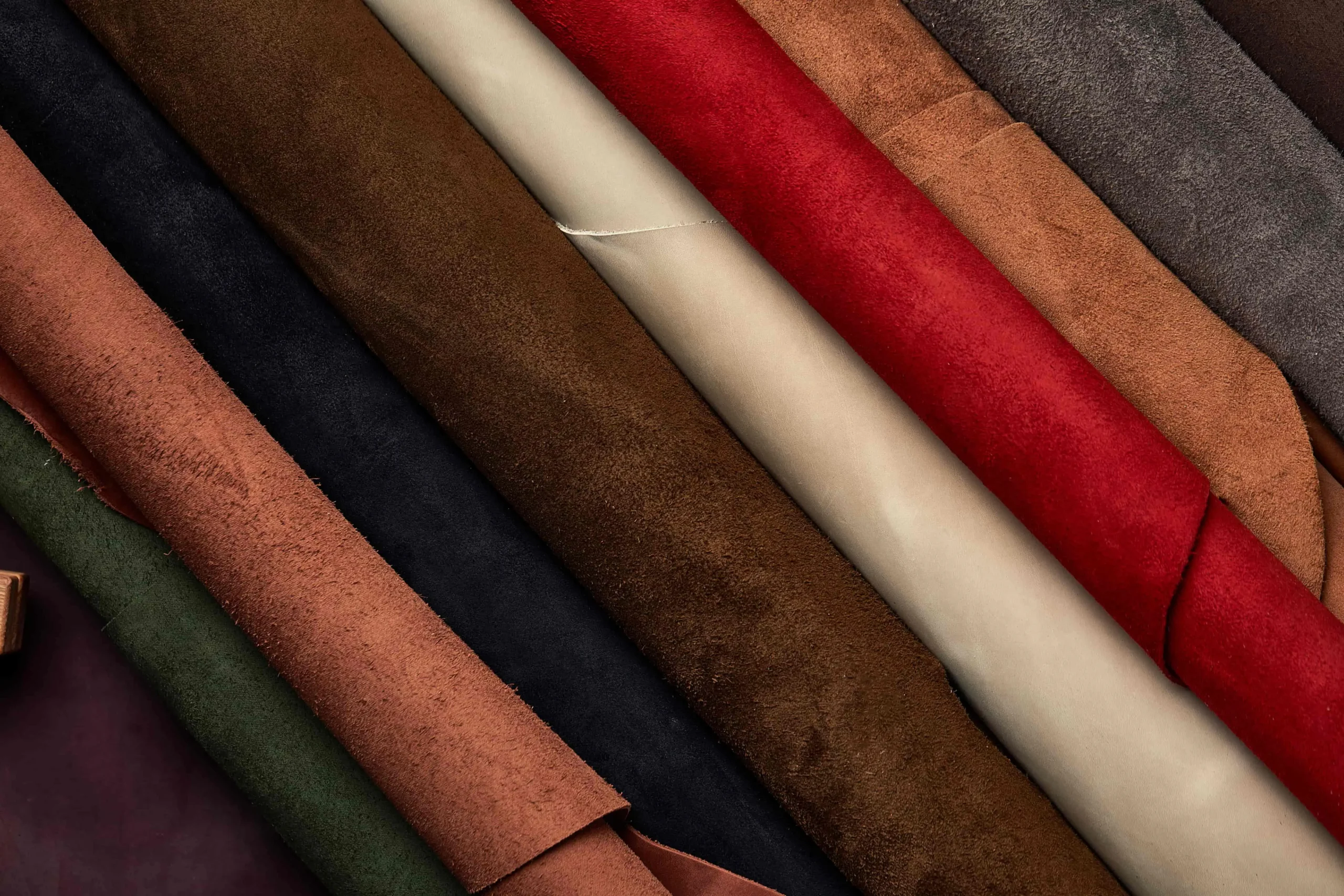
Faux leather starts with a textile backing — knit, woven, or non-woven — onto which a polymer coating is applied and finished to mimic leather grain, embossing, and sheen. PU leather uses a polyurethane topcoat; PVC leather uses polyvinyl chloride. Higher-end versions, including microfibre-based synthetic leather (often called microfiber PU), combine a microfiber non-woven base with a PU surface to get leather looks plus textile comfort. In automotive and furniture use, this is why many spec sheets now read “microfiber PU” — it is a hybrid, not one or the other.
What Microfiber Is
Microfiber refers to fibers finer than one denier — often 0.1 denier or less. When spun into non-woven fabrics and split, these fibers create an extremely dense, soft surface with millions of tiny voids per square meter. The structure gives microfiber three signature properties: exceptional softness, strong capillary action (it wicks moisture and traps dust), and high abrasion resistance per gram. Uncoated microfiber is the fabric behind performance towels and cleaning cloths; coated or backed microfiber becomes microfiber leather, used in premium seating and shoe linings. Across all applications, OEKO-TEX® Standard 100 certification is the common compliance baseline for exported synthetic leathers.
Head-to-Head Comparison
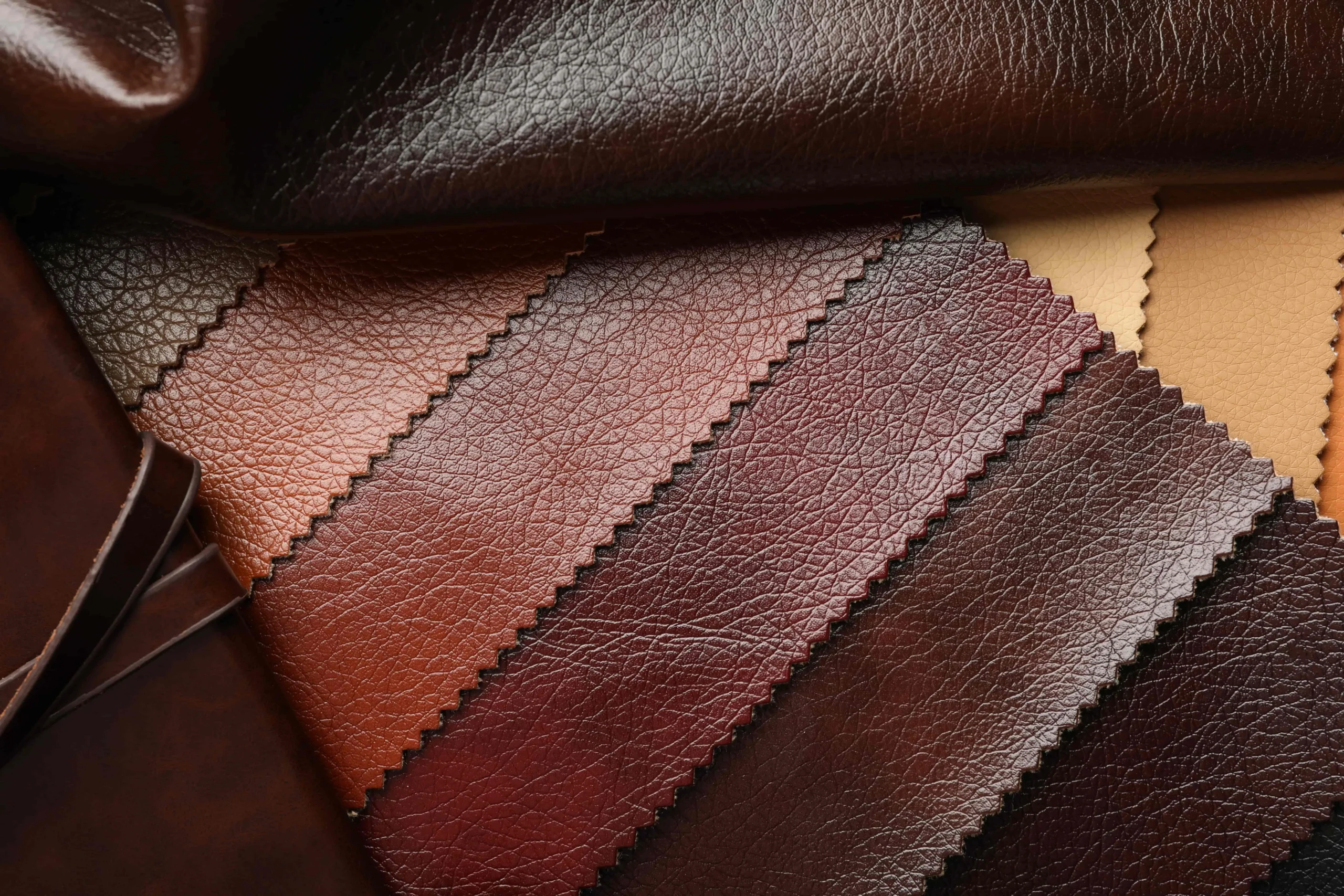
| Factor | Faux Leather (PU/PVC) | Microfiber (Fabric) |
|---|---|---|
| Appearance | Leather-like grain, sheen | Matte, textile-like |
| Hand feel | Smooth, slightly synthetic | Ultra-soft, plush |
| Breathability | Low to moderate | High |
| Water resistance | High (coated surface) | Low unless treated |
| Abrasion resistance | Good (coating dependent) | Very good |
| Moisture management | Poor | Excellent (wicks) |
| Cost | Low to medium | Medium to high |
| Care | Wipe clean | Machine washable (often) |
Durability & Wear Resistance
Durability is where the two diverge most. A well-made PU faux leather with a thick topcoat and stable backing resists abrasion and flexing well in furniture and seat applications, typically lasting 5-10 years indoors depending on quality and care. PVC is tougher but stiffer and prone to plasticizer migration over time. Microfiber fabric itself is extremely abrasion-resistant — in coated form it is the standard for premium automotive seat leather because the non-woven base resists tearing better than knit backings. The catch: uncoated microfiber stains and wets out quickly, so its durability advantage only applies in coated or backed constructions.
Hand Feel, Breathability & Comfort
Sit in a hot car on a sunny day and you will feel the difference immediately. Coated faux leather has low vapor permeability — the surface traps heat and moisture. Microfiber, with its dense network of fine fibers, breathes and wicks, which is why microfiber leather seats feel cooler in summer and less clammy after long drives. For apparel, shoes, and gloves, microfiber’s softness and drape make it the clear comfort winner; for structured furniture pieces where leather’s firm hand is part of the design, faux leather wins. Some premium products combine both: a microfiber base with a thin PU topcoat to get leather looks with better breathability than standard PU.
Cost & Manufacturing Differences
Standard PU/PVC faux leather is the most cost-efficient option for high-volume upholstery — coating lines run fast and raw material costs are low. Microfiber production is slower: the fiber is spun, needle-punched, split, and often finished in multiple stages, so the fabric commands a premium. The gap narrows in automotive use, where OEMs pay more for microfiber-backed materials to meet wear and tear requirements. As a rule: if budget per meter dominates your spec, choose PU; if performance and perceived quality dominate, budget for microfiber-based material.
Best Applications for Each
- Faux leather (PU): sofas, chairs, headboards, car seat covers, bags, jackets, straps — anywhere the leather look matters and wipe-clean care is desired.
- Faux leather (PVC): heavy-duty upholstery, restaurant seating, truck seats, luggage where abrasion and cost are primary.
- Microfiber fabric: activewear, cleaning cloths, towels, gloves, shoe linings — anywhere softness and wicking matter.
- Microfiber leather (hybrid): premium automotive seats, office seating, luxury bags and linings.
Because the categories overlap, the practical question is usually which construction — PU, PVC, or microfiber-backed — meets your application’s spec. That is a conversation worth having early with a material supplier who runs all three, like FUZHOU’s synthetic leather production.
How to Choose
For hybrid needs — leather looks with better comfort — ask for microfiber-based PU leather rather than standard knit-backed PU. Test samples against your actual use: a sample request to a manufacturer is the fastest way to compare abrasion, hand, and heat performance on your own product.
FAQ
Is microfiber more durable than faux leather?
Microfiber fabric is highly abrasion-resistant, but uncoated microfiber stains easily. Microfiber-based leather (non-woven base + PU top) is generally more tear-resistant than knit-backed PU, which is why premium car seats use it.
Which is more breathable, faux leather or microfiber?
Microfiber is far more breathable. Standard coated faux leather has low vapor permeability and traps heat, while microfiber wicks moisture and allows air movement.
Is microfiber leather the same as faux leather?
Microfiber leather is a type of faux leather — it uses a microfiber non-woven base with a polyurethane surface instead of a knit or woven backing. All microfiber leather is faux leather, but not all faux leather is microfiber.
Which is cheaper, PU leather or microfiber?
Standard PU leather is cheaper. Microfiber production involves more steps and premium raw material, so microfiber and microfiber-based leather cost more per meter.
Can microfiber replace faux leather for furniture?
For leather-look furniture, standard microfiber fabric cannot replace faux leather visually. But microfiber-based PU leather offers a good compromise — leather appearance with better comfort and tear resistance.
Engineered Faux Leather for Your Application
Sources: Wikipedia – Polyurethane; Wikipedia – Microfiber.