
Faux leather is durable, affordable, and versatile — but it is not indestructible. Over time, exposure to heat, friction, and everyday use can cause cracking, peeling, or tearing. The good news: most faux leather damage can be repaired at home with the right techniques and products.
Understanding Faux Leather Damage
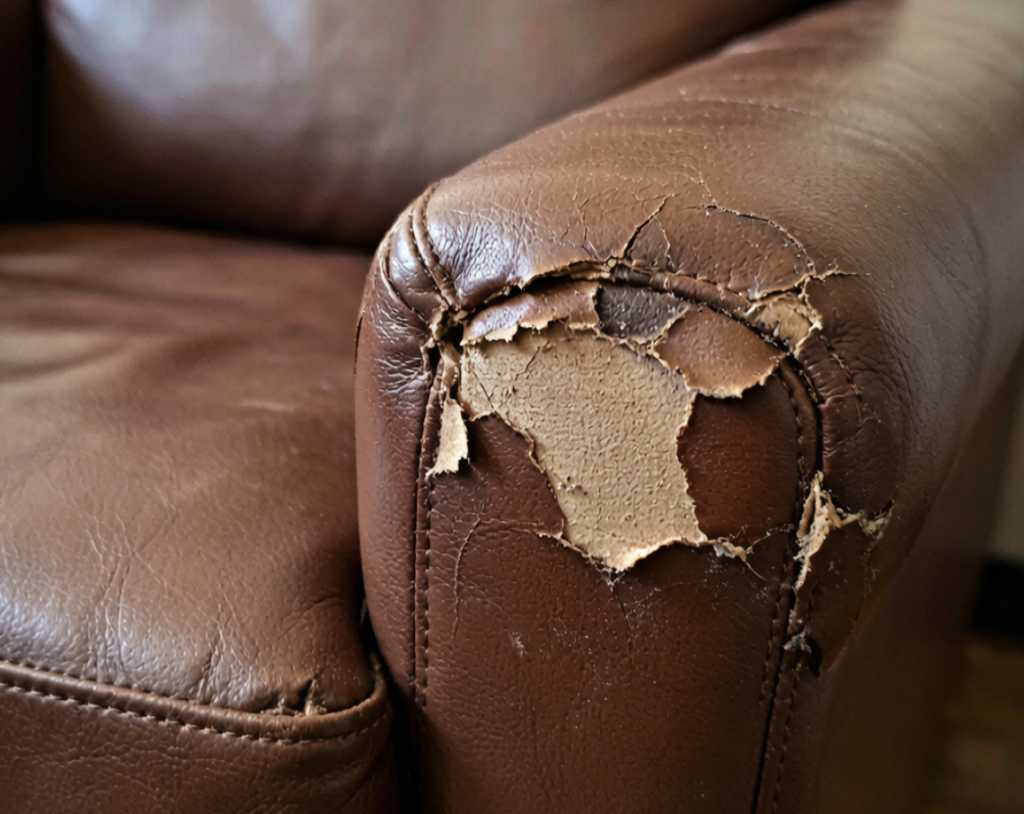
Faux leather (also called PU leather, PVC leather, or leatherette) consists of a fabric backing coated with a polymer layer. Damage typically starts in the top coat — the protective layer that gives faux leather its appearance and texture. Once this layer is compromised, the underlying fabric becomes vulnerable.
Quality testing standards from OEKO-TEX and Intertek help ensure premium faux leather resists cracking and peeling longer than budget alternatives.
Types of Faux Leather Damage
| Damage Type | Cause | Difficulty | Success Rate |
|---|---|---|---|
| Surface cracks | Dryness, UV exposure, age | Easy | 90% |
| Small tears (<1″) | Sharp objects, pet claws | Easy | 85% |
| Peeling (small area) | Wear, heat damage, poor adhesion | Moderate | 75% |
| Large peeling (>4″) | Age, heat, manufacturing defect | Difficult | 50-60% |
| Discoloration / fading | UV exposure, cleaning chemicals | Moderate | 80% |
| Large tears / holes | Accident, structural failure | Difficult | 40% |
Tools & Materials Needed
Essential repair kit items: Flexible faux leather repair compound, color-matched coating, adhesive backing patches, fine-grit sandpaper (400-600 grit), mixing tools, applicator sponges, isopropyl alcohol for cleaning, and a heat gun (for accelerated curing).
For best results, always use products specifically designed for faux leather repair rather than general-purpose fillers which can crack when the material flexes.
How to Fix Cracks
Step 1: Clean the area with isopropyl alcohol to remove oils and dirt. Step 2: Lightly sand the cracked area with 600-grit sandpaper to smooth the surface. Step 3: Apply a thin layer of flexible repair compound using a spatula or applicator. Step 4: Allow to cure completely (4-8 hours at room temperature, or 20-30 minutes with gentle heat). Step 5: Lightly sand and apply a second coat if needed. Step 6: Apply color coating to match the surrounding area. Step 7: Seal with a protective top coat.
How to Fix Tears
Critical step for tears: Always use a backing patch behind the tear. Without a backing patch, the repair compound has nothing to grip, and the tear will reopen under stress. Cut a piece of adhesive-backed fabric patch slightly larger than the tear, insert it behind the tear using tweezers, and press firmly before filling.
After the backing patch is in place: fill the tear opening with flexible repair compound, smooth flush with the surrounding surface, allow to cure, sand lightly, apply color coating, and seal.
How to Fix Peeling
Peeling occurs when the top polymer layer separates from the fabric backing. For small peeling areas: apply flexible adhesive beneath the peeling edge, press firmly, and weight overnight with a book. For large areas: consider using a liquid repair compound that re-bonds the layers. Apply in thin coats, allowing each to cure before applying the next.
How to Fix Discoloration
For faded or discolored faux leather: clean thoroughly, apply a color-restoring product designed for synthetic leather, then seal with a UV protectant. Test any color product on an inconspicuous area first.
Repair Kits vs Professional Repair
DIY repair kits ($15-40) work well for small cracks, minor tears, and localized peeling. Professional repair ($50-150 per area) is recommended for large peeling sections, structural damage, or valuable furniture pieces where visible repair lines would diminish the value.
Prevention & Maintenance
- Avoid direct sunlight and heat sources — UV and heat accelerate polymer breakdown
- Clean regularly with a soft damp cloth — never use alcohol, acetone, or bleach-based cleaners
- Apply UV protectant every 3-6 months
- Maintain indoor humidity at 40-60%
- Keep pets away from faux leather furniture (trim claws regularly)
- Rotate cushions periodically to distribute wear evenly
When to Replace Instead of Repair
Some situations call for replacing rather than repairing: structural damage to the foam or padding beneath the faux leather, large areas of peeling covering more than 30% of the surface, water damage causing mold or mildew beneath the surface, or faux leather that has become brittle and is cracking across the entire surface.
Choose Quality Faux Leather from Fuzhou
Prevention starts with quality materials. The best way to avoid constant faux leather repairs is to start with premium-grade material. Fuzhou Leather manufactures high-performance PU/PVC synthetic leather designed for durability, UV resistance, and long-term flexibility. Our products meet OEKO-TEX and Intertek testing standards — ideal for automotive, furniture, and marine applications.Request Samples or OEM/ODM Quote
FAQ
Can faux leather be repaired?
Yes — cracks, tears, peeling, and discoloration can all be repaired with the right techniques.
Best method for peeling?
Clean, apply flexible filler and adhesive, sand smooth, and recolor. For large areas, consider professional repair.
Can I fix a tear?
Yes — use a backing patch behind the tear before filling. This prevents the tear from reopening.
How long does repair last?
1-3 years depending on location and stress. High-flex areas may need touch-ups.
How to prevent damage?
Avoid direct sunlight, clean with damp cloth only, apply UV protectant, maintain moderate humidity.
Conclusion
Faux leather repair is achievable for most types of damage with the right approach. Small cracks and tears are straightforward DIY projects. Peeling and large damage areas may require more advanced techniques or professional help. The best strategy is prevention — starting with quality faux leather and maintaining it properly will minimize the need for repairs.