Bonded leather and faux leather are often confused — and sometimes deliberately mislabeled. Understanding the difference is essential for manufacturers, furniture buyers, and automotive specifiers who need materials that perform as expected.
Material Confusion
Both bonded leather and faux leather sit between genuine leather and fully synthetic materials. But they are fundamentally different in construction, durability, and value. The OEKO-TEX Standard 100 certification helps buyers verify material claims by testing for harmful substances and authenticating product descriptions.
What Is Bonded Leather?
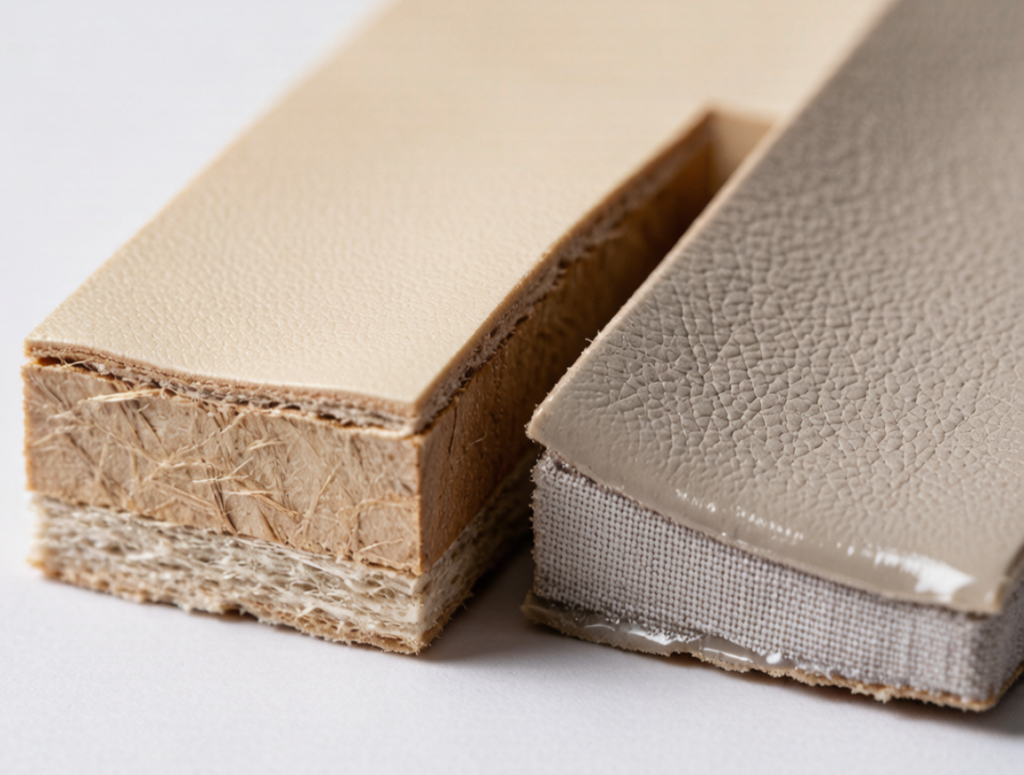
Bonded leather is made from shredded leather scraps and fibers (typically from tanneries) that are mixed with polyurethane or latex binder and spread onto a paper or fiber backing. It contains 10-50% natural leather content by weight, bonded together with synthetic adhesive. A polyurethane top coat provides the surface appearance.
Critical limitation: Bonded leather’s construction — ground fibers held together by adhesive on a paper backing — is inherently less durable than either genuine leather or quality faux leather. The paper backing is susceptible to moisture damage, and the bonded layer can delaminate over time.
What Is Faux Leather?
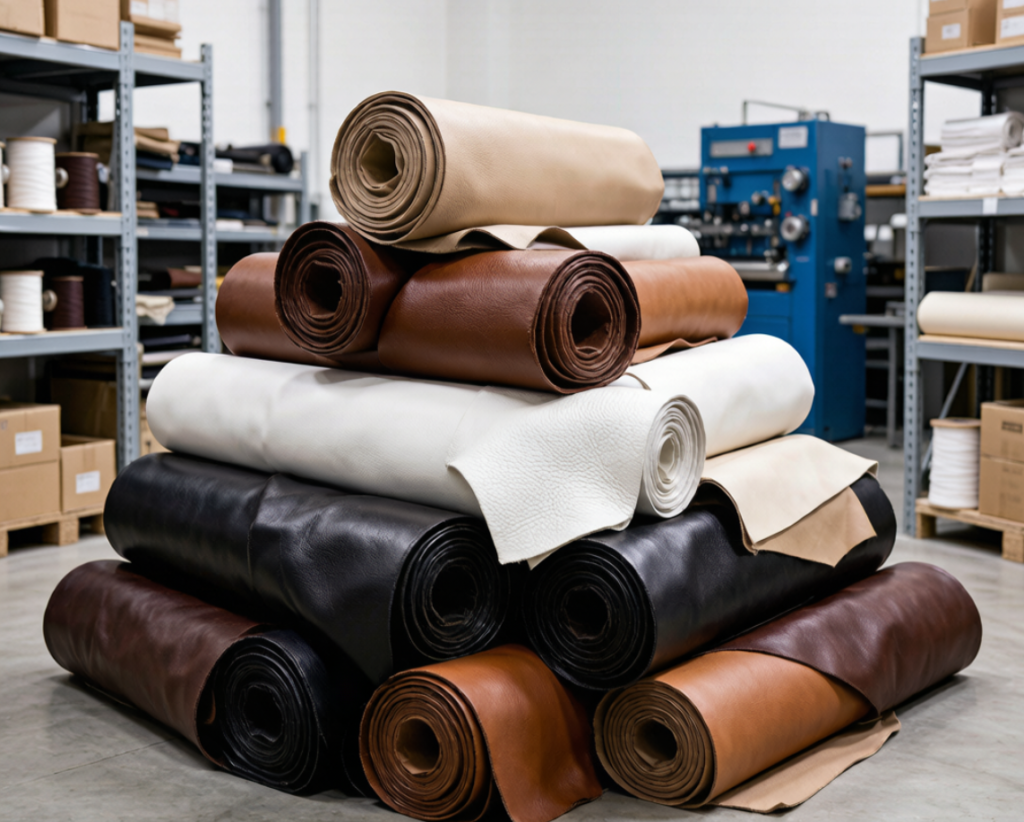
Faux leather (also called PU leather, PVC leather, or synthetic leather) is 100% synthetic. It consists of a polymer coating (polyurethane or PVC) applied to a fabric backing (woven polyester, non-woven, or knitted fabric). Premium faux leather from manufacturers like Fuzhou uses high-quality base fabrics and advanced coating technology for durability.
Construction Differences
| Feature | Bonded Leather | Faux Leather (PU) |
|---|---|---|
| Base material | Shredded leather fibers + adhesive | 100% polymer coating |
| Backing | Paper or fiberboard | Woven or non-woven fabric |
| Natural content | 10-50% leather | 0% (fully synthetic) |
| Top coat | PU coating | PU or PVC coating |
| Typical lifespan | 1-3 years | 5-10+ years |
Durability Comparison
Key finding: Quality PU faux leather outperforms bonded leather in every durability metric — tensile strength, tear resistance, flex endurance, and UV resistance. Bonded leather’s paper or fiberboard backing is particularly vulnerable to moisture and humidity. Faux leather’s fabric backing provides significantly better structural integrity.
Testing standards from SATRA Technology Centre provide industry-recognized methods for measuring durability of both leather and synthetic leather materials.
Cost Analysis
Bonded leather: $8-15 per linear yard (lower upfront cost, shorter lifespan). Faux leather (standard PU): $10-20 per yard. Faux leather (premium): $15-30 per yard. 10-year total cost example: Using bonded leather on a sofa (replaced every 3 years) = $24-45 per yard. Premium faux leather (one installation lasting 10+ years) = $15-30 per yard.
Appearance & Feel
Bonded leather can look very close to genuine leather initially, with a natural grain pattern and warm feel. However, the appearance degrades rapidly — the bonded layer can develop a cracked alligator-skin pattern as it wears. Premium PU faux leather, by contrast, maintains its appearance consistently throughout its service life.
Application Suitability
| Application | Bonded Leather | Faux Leather |
|---|---|---|
| Furniture (sofa, chairs) | Poor — delaminates under regular use | Good — durable, easy to clean |
| Automotive seats | Not recommended | Excellent — with UV-stabilized PU |
| Bookbinding / notebooks | Good — low stress application | Good |
| Clothing / accessories | Poor — cracks with flexing | Good — flexible grades available |
How to Tell Them Apart
Check the backing material: bonded leather has a paper-like or fiberboard backing; faux leather has fabric. Burn test (on a scrap): bonded leather smells like burning hair (protein content); faux leather smells like burning plastic. Water test: bonded leather absorbs water (paper backing); quality faux leather is water-resistant.
Premium Faux Leather from Fuzhou
Don’t settle for bonded leather’s short lifespan. Fuzhou Leather manufactures premium PU and PVC faux leather designed for long-term performance. Our products feature high-strength fabric backings, UV-stabilized coatings, and rigorous quality testing per OEKO-TEX and Intertek standards. Ideal for furniture, automotive interiors, marine, and commercial applications.Browse Fuzhou Faux Leather Collection → | Contact Us for Samples & OEM
FAQ
Difference between bonded and faux leather?
Bonded = shredded leather fibers + adhesive on paper backing. Faux = 100% synthetic polymer on fabric backing.
Which is more durable?
Quality faux leather lasts 5-10+ years vs 1-3 years for bonded leather under normal use.
Which is better for furniture?
PU faux leather — bonded leather delaminates too quickly on high-use furniture.
Is bonded leather cheaper?
Upfront: yes ($8-15/yd). Long-term: no — replacement costs exceed premium faux leather over 10 years.
How to tell them apart?
Check the backing: paper/fiberboard = bonded leather. Fabric = faux leather.
Conclusion
Bonded leather and faux leather serve different purposes and price points. Bonded leather offers a low-cost option for light-use applications like bookbinding. Quality PU faux leather provides superior durability, consistency, and value for furniture, automotive, and demanding commercial applications. Understanding the difference helps buyers make informed sourcing decisions.