
If your ESG goal is reducing fossil-based material use, bio-based leather is often the better fit. If your priority is circularity and waste reduction, recycled leather makes more sense. The lower-risk choice is the one with verified data, stable quality, and real application performance—not the better marketing label.
More brands are adding ESG targets to material sourcing decisions. But bio-based leather and recycled leather are not interchangeable. They solve different sustainability challenges, and each comes with different operational risks.
What Is Bio-Based Leather?

Bio-based leather is synthetic leather made with partially renewable raw materials such as corn, castor oil, or sugarcane derivatives instead of relying fully on petroleum-based inputs. It helps reduce fossil resource use and supports carbon reduction goals.
But bio-based does not mean plastic-free. Most products still contain PU or similar synthetic polymers. The key difference is the percentage of renewable content and whether that claim is verified.
What Is Recycled Leather?
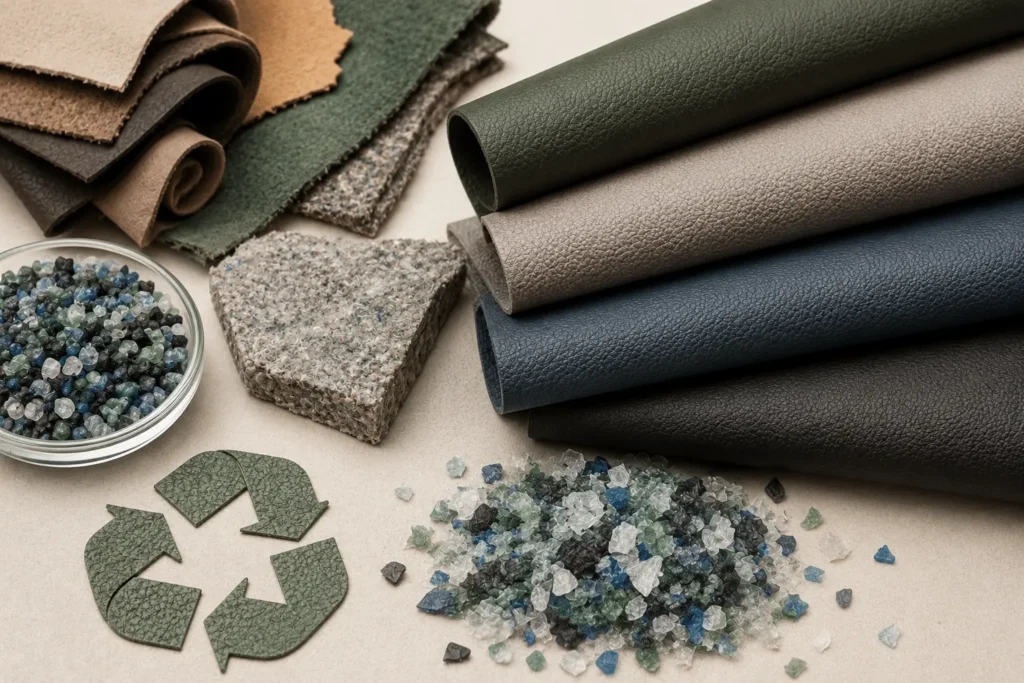
Recycled leather usually refers to materials made with recycled polymer inputs or leather waste. Some use recycled PET or recycled PU in synthetic leather production. Others use bonded leather made from leather scraps and binders.
Its main ESG advantage is waste reduction and stronger circular economy positioning. The main challenge is that quality consistency depends heavily on raw material control.
Full Grain Leather Feels More “Honest”
Recycled leather usually refers to materials made with recycled polymer inputs or leather waste. Some use recycled PET or recycled PU in synthetic leather production. Others use bonded leather made from leather scraps and binders.
Its main ESG advantage is waste reduction and stronger circular economy positioning. The main challenge is that quality consistency depends heavily on raw material control.
ESG Comparison
| Factor | Bio-Based Leather | Recycled Leather |
|---|---|---|
| Fossil material reduction | Strong | Strong |
| Waste reduction | Limited | Strong |
| Circular economy alignment | Moderate | Strong |
| ESG marketing value | Strong | Strong |
| Batch consistency | More stable | More variable |
| Supply transparency | Medium | Supplier-dependent |
Where the Real Risk Starts
The biggest sourcing mistake is choosing based on labels alone.
A bio-based claim sounds safe, but some materials contain only a small percentage of renewable content. A recycled claim sounds responsible, but traceability may be unclear. ESG decisions without documentation create compliance and reputational risk.
Buyers should focus on verified material data, not broad sustainability language. Certification support, recycled content traceability, and transparent technical documentation matter far more than marketing terms.
Performance Risk Still Exists
A sustainable material that fails in real use is still a bad ESG decision.
For furniture upholstery, bags, automotive interiors, or baby products, performance requirements do not disappear because a material is greener. Abrasion resistance, hydrolysis stability, color fastness, backing strength, and VOC compliance still determine whether the material works in production.
Poor durability creates returns, replacements, and more waste. That directly weakens ESG outcomes.
Which Option Is Lower Risk?
Bio-based leather is usually the safer option when brands need stronger carbon reduction positioning and more predictable synthetic leather performance. Recycled leather is stronger when circular sourcing and waste reduction are the main ESG targets.
The best decision is rarely about choosing the “greenest” label. It is about choosing the material that matches both ESG goals and real product performance.