If you’ve sourced faux leather before, you probably already know this: price is rarely the biggest problem.
Inconsistency is the main issue.
A sample can look perfect. The color is right, the texture feels good, and everything seems ready to go. Then production arrives, and something changes. The tone shifts slightly, the surface feels different, or, in some cases, the material doesn’t hold up the way it should;
That’s usually the moment people realize they didn’t choose a supplier. They chose a risk.

Not All Faux Leather Is Actually Comparable
At first glance, most suppliers appear quite similar. Materials like PU, PVC, and microfiber are common categories, and nearly every manufacturer claims they can produce them.
However, after working with several different producers, it becomes evident that these labels don’t reveal much about the actual quality. What truly counts is the manufacturing process, not just the name of the material.
Two factories might use identical base materials yet end up with vastly different products. The key differences usually lie in process control—such as the stability of the coating, the uniformity of the base fabric, the finishing of the surface, and how strictly production parameters are maintained.
That’s why seasoned buyers don’t depend solely on specifications. They’ve witnessed firsthand how varied the outcomes can be.
Where “Low Cost” Starts to Become Expensive
Lower pricing is always attractive, especially in the early stages. However, in actual sourcing projects, it often involves trade-offs that are not immediately apparent.
You might notice slight color variations between batches, which may not seem significant until your products are placed side by side. Additionally, the backing fabric may behave differently during sewing, causing unexpected issues in production. Sometimes, the adhesion is not stable enough, and problems only become apparent after the product reaches the market.
None of these issues are dramatic on their own, but together they create friction—delays, rework, and customer complaints. At that point, whatever you saved upfront is usually lost.
What Actually Makes a Manufacturer Reliable
A dependable supplier doesn’t merely deliver materials. They manage the full process behind them.
One thing I always pay attention to is how they talk about consistency. Not just broadly, but with real details. Can they clearly explain how they control coating thickness? Do they use fixed parameters, or does it vary from batch to batch? Is their curing process consistent, or do they tweak it depending on the case?
If they can’t answer these questions clearly, it often means consistency relies more on personal experience than on a reliable system—and that’s where variation begins.
Good Manufacturers Adjust to Your Product
One detail that’s often missed is how closely the material actually fits the intended use.
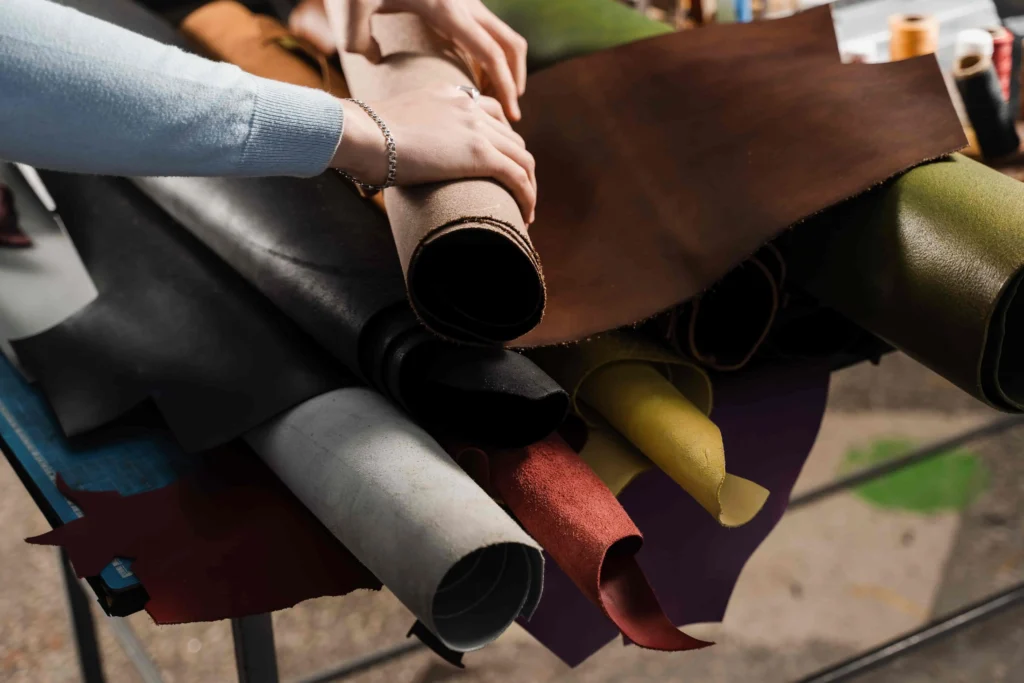
Faux leather isn’t truly one-size-fits-all. A bag, a sofa, and an automotive interior might all be marketed as “PU leather,” but they face totally different performance needs. Flexibility, abrasion resistance, heat stability—everything matters, and the right balance depends on where the material will be used.
A solid manufacturer won’t simply provide a standard sheet and expect you to make it work. Instead, they fine-tune the thickness, surface feel, and backing structure to match how your product is built and used.
That’s usually a strong sign they don’t just understand manufacturing—they understand real-world application.
Quality Control Is Only Meaningful If It’s Built Into the Process
Almost every supplier will claim they have QC—that part is simple.
The real question is where and how it’s applied. If quality control only takes place at the end, it’s already too late. At that point, the variation has already been created.
The more dependable manufacturers build control directly into the process. They track things throughout production, verify materials in real time, and treat final inspection as confirmation—not as a chance to fix issues.
It’s a small distinction, but it shows up very clearly in long-term consistency.
Communication Is Part of Production
One thing people often overlook is communication.
When a supplier takes the time to understand your product, asks the right questions early, and responds with clear answers, the process usually runs much more smoothly. You end up spending less time stuck in back-and-forth conversations, and there are fewer mistakes along the way.
But if communication is unclear, it often results in the wrong material choices, repeated rounds of sampling, and delays that are hard to fix once they happen.
It might not look like a technical problem on the surface, but in reality, it affects everything.
A Practical Way to Test a Supplier
If you’re unsure whether a manufacturer can be trusted, an easy approach is to check their consistency right from the start.
Request a few different variations of the same material. Make minor changes to the thickness or finish, and then ask for a repeat sample once everything has been approved.
What matters here isn’t perfection—it’s stability. If the results remain consistent through each step, that’s a strong indicator. If they don’t, the variations will stand out even more once you move to bulk production.
Final Thoughts
Choosing a faux leather manufacturer is rarely just about getting the lowest quote.
It’s really about finding a partner who can supply the same material reliably, time after time, without making you second-guess every order.
Because over the long haul, consistency isn’t only a production concern—it’s what safeguards your product, your schedule, and ultimately, your reputation.